
Transitioning from Online to OTB Elo: Key Differences and Challenges
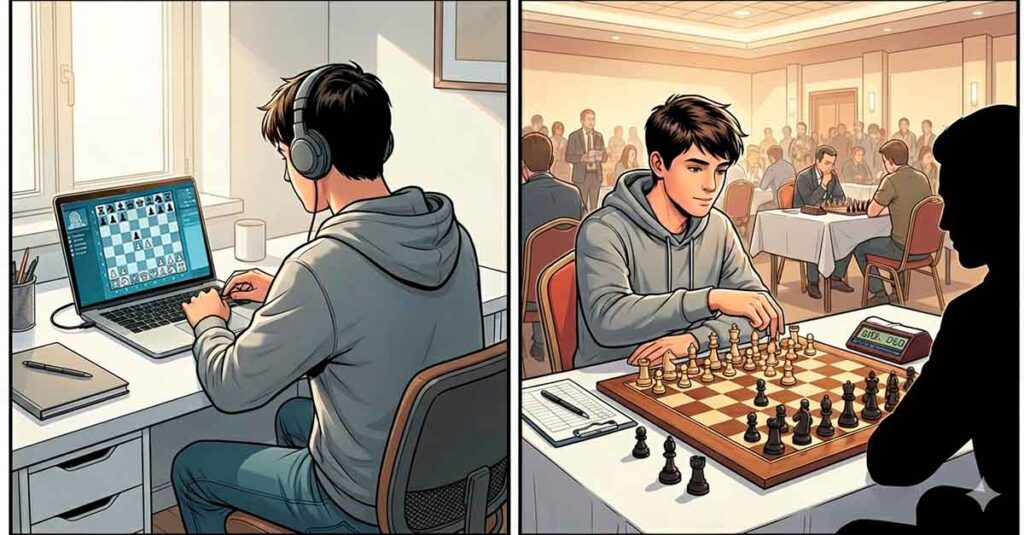
Transitioning from online chess to over-the-board (OTB) play is an exciting step for many players. While both formats rely on the same core skills, there are critical differences in environment, psychology, and Elo calculation that can dramatically affect performance. Understanding these challenges and preparing accordingly is essential for a smooth shift.
Understanding the Rating Systems
Both online and OTB chess utilize Elo-based systems, but they differ significantly in how ratings are assigned, adjusted, and interpreted.
Online Elo Ratings:
- Faster Adjustment: Online platforms use high K-factors, especially for new accounts, which can lead to rapid changes in rating.
- High Variance: Due to the sheer volume of games and time control variations (Rapid, Blitz, Bullet), ratings can fluctuate widely.
- Platform Differences: Chess.com, Lichess, and others each have their own rating pools and algorithms, making cross-platform comparisons unreliable.
OTB Elo Ratings (FIDE, National Federations):
- More Stable: K-factors are lower, especially at higher levels, leading to more gradual rating changes.
- Unified Standards: Ratings are recognized internationally and tied to official events.
- Longer Time Controls: Most OTB games are classical, allowing for deeper strategic play.
Key Challenges When Transitioning
1. Time Control Adaptation
Online players often rely on Blitz and Bullet experience, which emphasizes quick pattern recognition and speed. In contrast, OTB games typically use classical time controls, requiring endurance and deep calculation.
Strategy: Play longer online games to build patience and analysis skills before competing OTB.
2. Physical Presence and Environment
Online chess is usually played in a comfortable, distraction-free environment. OTB tournaments introduce new stimuli: the presence of opponents, noise, clocks, physical scoresheets, and more.
Strategy: Simulate tournament conditions by playing practice games with a board, clock, and scoresheet.
3. Psychological Pressure
In-person games come with increased psychological stress. Players can see their opponents' emotions, and blunders feel more personal.
Strategy: Build emotional resilience by participating in local clubs or small OTB events to gain experience.
4. Cheating Concerns
Online platforms have strict anti-cheating measures, but suspicion can still affect ratings. OTB chess eliminates most of these doubts through direct supervision.
Note: While OTB removes certain uncertainties, the pressure of fair competition is much higher.
Elo Discrepancies Between Online and OTB
It’s common for players to notice significant differences between their online and OTB ratings. Online ratings (especially Blitz or Bullet) are often 200–400 points higher than FIDE ratings.
Reasons for the Gap:
- Time Control Bias: Online formats reward quick tactics; OTB favors long-term planning.
- Volume of Play: Online players can gain or lose rating quickly due to higher activity levels.
- Strength of Opposition: Rating pools online may be inflated or deflated depending on the platform.
Preparing for a Successful Transition
1. Focus on Classical Chess
Dedicate time to studying and playing classical games. Use databases like ChessBase and follow high-level tournaments to understand modern strategies.
2. Endgame and Calculation Drills
Classical games often reach complex endgames. Improve calculation by solving exercises and studying essential theoretical endings.
3. Tournament Etiquette
Learn the rules and customs of OTB play, including touch-move, draw offers, and use of scoresheets. This avoids penalties and helps maintain focus.
4. Physical and Mental Conditioning
Endurance matters in long OTB events. Get regular sleep, maintain hydration, and incorporate light physical activity to sustain energy levels.
Final Thoughts
Moving from online to over-the-board chess is a major step that introduces new challenges—but also deepens a player's connection with the game. By understanding the key differences and adopting appropriate strategies, players can ensure their transition is both successful and rewarding. Elo growth may be slower, but with persistence and preparation, long-term improvement is inevitable.
Leave a Reply